
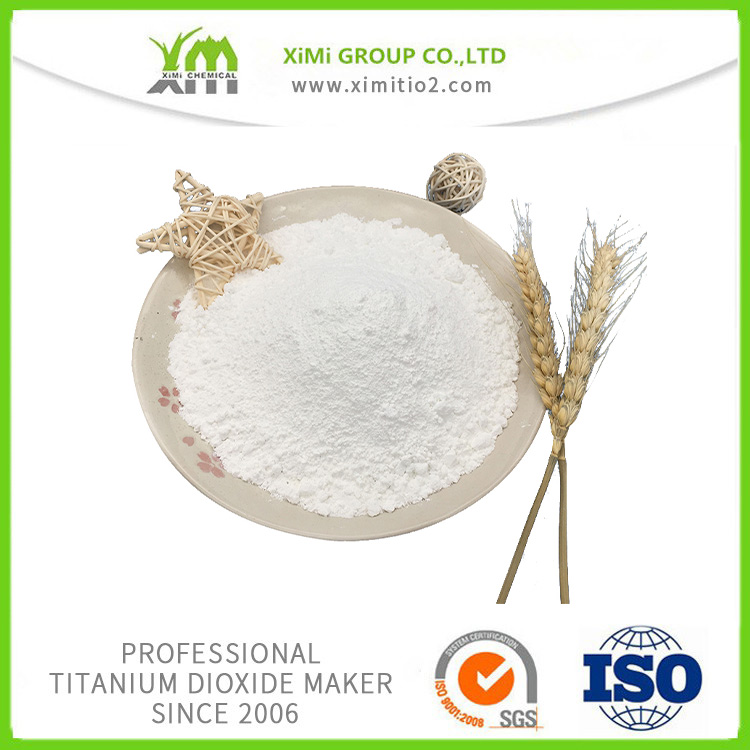
Titanium dioxide (TiO₂) is a naturally occurring oxide of titanium that has become an indispensable material in various industries due to its exceptional physical and chemical properties. Known primarily for its high refractive index and strong UV light absorbing capabilities, titanium dioxide plays a crucial role in enhancing product quality, safety, and longevity. In this article, we explore what titanium dioxide does, its wide-ranging applications, and highlight the expertise of a seasoned manufacturer in this field.
### What Does Titanium Dioxide Do?
Titanium dioxide serves multiple functions across different sectors owing to its unique characteristics:
1. **Pigmentation and Whitening Agent**
Titanium dioxide is widely utilized as a white pigment in paints, coatings, plastics, paper, inks, and cosmetics. Its high refractive index means it scatters visible light efficiently, offering the brightest and most opaque white color available. When added to products, it enhances brightness, opacity, and durability. For instance, in paints and coatings, TiO₂ ensures excellent coverage, gloss, and longevity against environmental exposure.
2. **UV Protection**
TiO₂ is an effective ultraviolet (UV) light absorber and protector. This ability is crucial in sunscreen formulations, where it protects skin from harmful UVA and UVB radiation by reflecting and scattering ultraviolet rays. Similarly, in coatings and plastics, titanium dioxide helps stabilize products against degradation caused by UV exposure, thereby extending their functional life.
3. **Photocatalytic Activity**
Beyond pigmentation, titanium dioxide exhibits photocatalytic properties. When exposed to light, particularly UV, TiO₂ can catalyze chemical reactions that break down organic pollutants, bacteria, and harmful substances. This property is leveraged in environmental purification applications, such as self-cleaning surfaces, air purifiers, and antimicrobial coatings.
4. **Enhancer of Material Properties**
In various industrial processes, TiO₂ improves the mechanical strength, scratch resistance, brightness, and weatherability of materials. Its incorporation in fibers and plastics not only changes optical effects but also enhances physical performance.
### Types of Titanium Dioxide
Titanium dioxide primarily exists in two crystal structures: rutile and anatase/'>anatase.
- **Rutile Titanium Dioxide**
This is the most common form used in pigments due to its high refractive index, excellent stability, and superior durability in outdoor applications. It’s the go-to choice for coatings, plastics, paints, and paper.
- **Anatase Titanium Dioxide**
Anatase TiO₂ has lower refractive properties but superior photocatalytic activity, making it ideal for applications requiring UV protection and environmental purification effects, such as in self-cleaning surfaces and antimicrobial agents.
### Production Methods
Titanium dioxide is produced mainly by two processes: the **chloride/'>chloride process** and the **sulfate process**. The chloride process generates ultra-pure TiO₂ with consistent particle size and high brightness, preferred for premium-grade applications. On the other hand, the sulfate process is more versatile and economical, often used for producing rutile and anatase types.
### Industry Leadership in Titanium Dioxide Manufacturing
With the growing demand for high-quality TiO₂, specialized manufacturers play a critical role in advancing technology and meeting diverse industry needs. One such notable company is **XiMi**, which boasts 17 years of rich experience in titanium dioxide production. Their professional sales team and technical expertise enable them to tailor solutions that meet stringent quality standards and evolving customer requirements.
XiMi specializes in multiple titanium dioxide variants, including:
- **Rutile Titanium Dioxide:** Known for durability and high opacity, suitable for paints, coatings, and plastics.
- **Anatase Titanium Dioxide:** Preferred for applications requiring photocatalytic activity.
- **Chloride Titanium Dioxide:** Produced through the chloride process ensuring high purity and brightness.
- **Fiber Titanium Dioxide:** Engineered for use in fibers and textiles, enhancing brightness and mechanical properties.
Through continual innovation, XiMi ensures its products maintain excellent dispersion, brightness, and stability, helping clients across industries like construction, automotive, textiles, and personal care benefit from cutting-edge TiO₂ solutions.
### Applications Driving Demand for Titanium Dioxide
Titanium dioxide’s versatility translates into widespread use in numerous sectors:
- **Paints and Coatings:** Enhances whiteness, opacity, and UV protection, contributing to longer-lasting and more vibrant finishes.
- **Plastics:** Improves brightness and resistance to discoloration, extends product life and consumer appeal.
- **Paper:** Provides opacity and brightness, improving print quality and durability.
- **Cosmetics:** Used in sunscreens and makeup for pigment and UV protection benefits.
- **Textiles and Fibers:** Adds whiteness and enhances strength and durability.
- **Environmental Technologies:** Utilized in photocatalysis for pollution control and antimicrobial surfaces.
### Environmental and Safety Considerations
While titanium dioxide is generally regarded as safe and chemically inert, concerns have been raised regarding nanoparticle forms, especially in inhaled or ingested quantities. Responsible manufacturers invest heavily in research and comply with regulatory standards to ensure their products are safe and environmentally sustainable. Advanced manufacturing techniques also promote minimizing waste and energy consumption throughout the production cycle.
### Conclusion
Titanium dioxide remains a cornerstone material across multiple industries, its multifunctional properties making it indispensable in everyday products. As technical demands evolve, manufacturers like XiMi with sixteen-plus years of experience are at the forefront, providing high-quality rutile, anatase, chloride, and fiber titanium dioxide variants. Their commitment to quality, innovation, and customer service helps propel the industry forward, ensuring titanium dioxide continues to meet the needs of modern applications efficiently and sustainably.
The diverse applications, benefits, and ongoing developments in titanium dioxide technology underscore its significance — not just as a pigment, but as a key enabler of product performance and environmental innovation.