
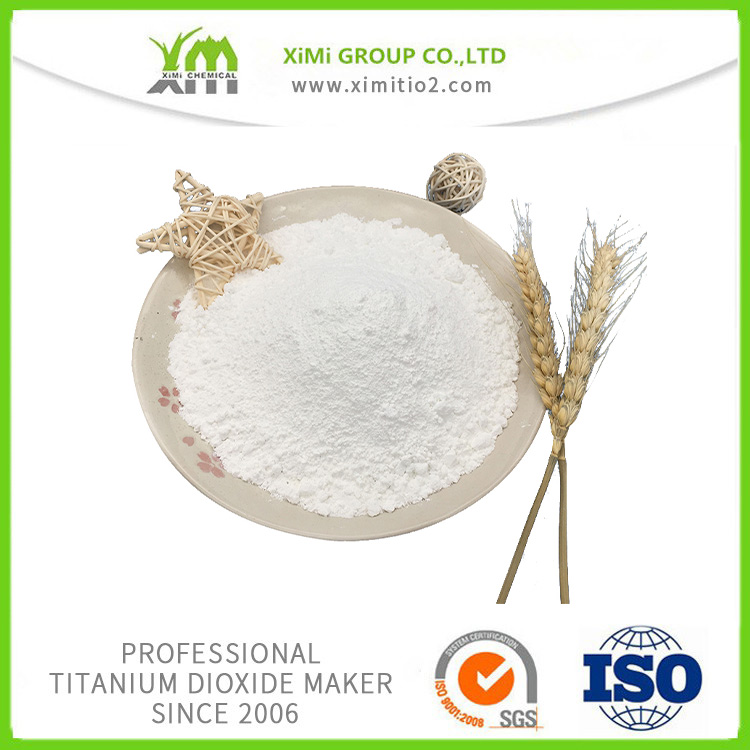
In recent years, titanium dioxide (TiO2) has garnered significant attention in the cosmetics industry, especially in skin care products. Known for its excellent UV-blocking properties and whiteness, titanium dioxide is widely used as a physical sunscreen agent, pigment, and opacifier in various formulations. As public awareness grows about the ingredients in personal care products, understanding the role and safety of titanium dioxide has become paramount for consumers and manufacturers alike.
### What is Titanium Dioxide?
Titanium dioxide is a naturally occurring oxide of titanium, widely utilized across multiple industries due to its brightness, high refractive index, and chemical stability. In the cosmetics and personal care sector, it serves multiple functions:
- **UV Protection:** Titanium dioxide is a key active ingredient in physical sunscreens because it reflects and scatters UV rays, protecting the skin from harmful effects such as sunburn and premature aging.
- **Pigmentation:** Its white pigment provides opacity and enhances the texture and appearance of cosmetics.
- **Opacifier:** Titanium dioxide improves the coverage and finish of lotions, creams, and other topical products.
### Titanium Dioxide in Skin Products: Safety Concerns and Regulations
Despite its widespread use, titanium dioxide has faced scrutiny regarding safety, particularly when used in nanoparticle form. Various health agencies, including the European Chemicals Agency (ECHA) and the U.S. Food and Drug Administration (FDA), have evaluated its safety profile extensively.
The primary concern involves the inhalation of titanium dioxide nanoparticles, which has been linked to respiratory issues when airborne particles are inhaled in high concentrations. However, in topical skin products, titanium dioxide is generally regarded as safe. The particles do not typically penetrate the skin barrier, especially when properly coated or formulated, minimizing systemic exposure.
Regulatory standards require cosmetic manufacturers to adhere to strict guidelines about the concentration, particle size, and labeling of titanium dioxide-containing products. This ensures consumer safety while maintaining product efficacy.
### The Role of Titanium Dioxide Manufacturers in Cosmetic Innovation
Behind every effective titanium dioxide-enabled skin product lies the expertise of specialized manufacturers dedicated to producing high-quality TiO2 products. One such manufacturer with a proven track record in this field is XiMi. With 17 years of rich experience, XiMi has established itself as a prominent supplier of various types of titanium dioxide, including:
- **Rutile Titanium Dioxide:** Known for its excellent durability, high hiding power, and superior UV resistance, rutile TiO2 is extensively used in sun care and pigment applications.
- **anatase-titanium-dioxide/'>Anatase Titanium Dioxide:** Valued for its photocatalytic properties, anatase titanium dioxide finds usage in niche cosmetic formulations.
- **Chloride Titanium Dioxide:** Produced via the chloride/'>chloride process, this form offers high purity and brightness, ideal for premium cosmetic products.
- **Fiber Titanium Dioxide:** Designed for specialized industrial and cosmetic applications requiring enhanced stability and dispersibility.
XiMi’s commitment extends beyond production to include a professional sales team that works closely with cosmetic formulators to tailor titanium dioxide products to meet specific formulation needs. This collaborative approach accelerates innovation across the skin care sector, delivering products that balance safety, performance, and consumer appeal.
### Industry Trends and Future Outlook
The demand for mineral-based and “clean” skin care products has surged, driven by consumers’ preference for natural and safe ingredients. Titanium dioxide, as a mineral physical sunscreen agent, fits well within this trend, providing broad-spectrum UV protection without relying on chemical filters that can irritate sensitive skin.
Manufacturers like XiMi are continuously refining their production processes to supply titanium dioxide that meets the evolving regulatory standards and sustainability goals. Advancements in surface coatings and particle engineering also enhance the safety profile and functional properties of TiO2 in cosmetic formulations.
Moreover, ongoing research aims to optimize the interaction between titanium dioxide and other ingredients, improving texture, reducing whitening effects on the skin, and ensuring long-lasting protection.
### Conclusion
Titanium dioxide remains a cornerstone ingredient in skin care products, particularly physical sunscreens, due to its efficacy and safety profile. With rigorous regulatory oversight and responsible manufacturing practices, titanium dioxide continues to enable innovative and safe cosmetic products.
Companies like XiMi, with extensive experience and expertise in producing various forms of titanium dioxide, play an essential role in supporting the cosmetic industry’s demand for high-quality, reliable TiO2 materials. As the market grows and consumer preferences evolve, titanium dioxide’s role in skin care formulations is set to remain significant, contributing to skincare protection and overall product performance.
For consumers, staying informed about the ingredients and their manufacturers helps build confidence in product choices and supports a transparent and sustainable beauty industry.
---
*This article highlights the critical role titanium dioxide plays in skin products today, emphasizing safety, regulatory compliance, and the industry’s innovation driven by experienced manufacturers.*